

Starting a business is like swimming in deep waters. You are never sure you are moving in the right direction. If this is the case, take a step back and ask yourself: Do I have a proper business plan? Startups struggle to survive, and those with a clear business plan are 16% more likely to succeed. A business plan is not just paperwork - it's your entrepreneurship guide to move forward and avoid common pitfalls. But how to make a startup business plan that really matters? Let’s explore it in detail!
Importance of a business plan for startups
You might be surprised to learn that some businesses started without a formal business plan and still succeeded. Facebook is a good example. Mark Zuckerberg initially launched Facebook as a small college project with no detailed business plan. It grew rapidly, mostly through word of mouth, and Zuckerberg was able to adapt as it expanded. Today, everyone knows about the platform’s global success.
However, many more startups have failed because they didn’t have a clear startup business plan. Take Juicero, for example. The company raised millions for a high-tech juice machine, but the product didn’t meet consumer needs, and its complex design turned out to be unnecessary. Juicero’s downfall was partly due to a lack of clear planning and market understanding.
So, business planning matters. And even Zuckerberg created it when he was seeking funding. How can a startup business strategy help?
- Clear roadmap. A business plan sets your company’s mission, vision, and goals and gives your team a solid direction.
- Smarter decisions. It allows you to evaluate strengths, weaknesses, opportunities, and threats to make informed decisions.
- Efficient operations. A business plan outlines customer targeting, marketing, and budgeting for more productive activities.
- Attract investors. A well-thought-out plan shows investors your business is credible and increases your chances of securing funding.
- Track progress. A plan will help you measure success and adjust your goals.
What is a startup business plan?
A business plan is a document that outlines what a business wants to achieve, how it plans to do it, and the resources needed to get there. It helps startup founders clarify their business goals and objectives and use the best success strategies. A strong business plan paired with a well-designed investor pitch deck can attract investors as it shows the business's potential for growth and profit. And what’s most important is that it is not a one-time document but a living tool that continuously adapts as the business grows and evolves.
If you’re searching for an example startup business plan, you’ll find that it serves as a foundation to help you prepare for challenges, secure funding, and outline the path to growth.
Types of business plans (traditional vs. lean startup)
There are many approaches to crafting a business model canvas, but let’s compare two main ones: the Lean Startup methodology and traditional business planning.
- Traditional business plan. This plan is detailed and covers every aspect of your business. It includes your goals, market research, operations, and small business financial projections. It’s often used when entrepreneurs are trying to get funding for startups. This model provides a comprehensive view of the business. It can be extensive and requires significant research.
- Lean startup plan. This plan is shorter and more flexible. It focuses on the key parts of your business, like your value proposition, customer base, and revenue model. It’s ideal for startups that want to move quickly and are still figuring out the best way to grow their business.
Let’s create a traditional business plan template for an imaginary tech company.
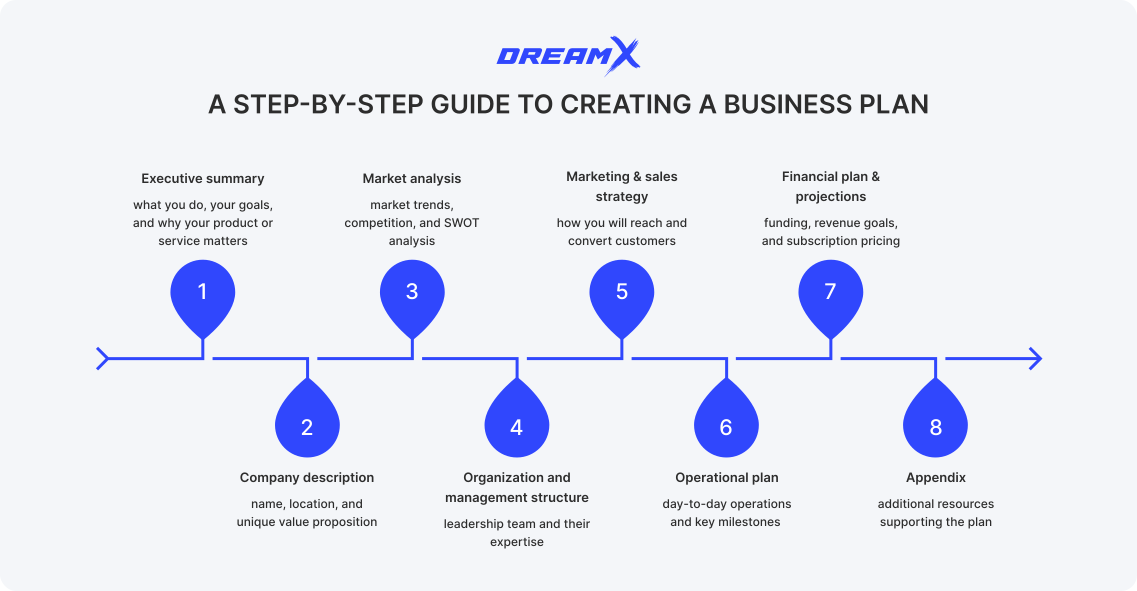
Step 1: Executive summary
Start with a quick snapshot of your company - what you do, your goals, and why your product or service matters. Mention the problem you solve, who your customers are, and how you plan to succeed. The business plan executive summary must be short and grab attention.
 TechX Solutions is a technology startup that offers innovative software business solutions. Our core product is an AI-powered customer service chatbot. We aim to change the way retail businesses operate and improve the shopping experience.
Step 2: Company description
Share the basics about your business: name, location, and what you’re all about. Explain your tech focus, like software, AI, or gadgets, and what makes you stand out from others in the market.
TechX Solutions is based in Toronto and aims to help retailers improve everyday operations with powerful AI tools. Our chatbot adapts to individual e-commerce needs, integrates with the biggest marketplaces and improves its performance as it learns. It is a solution that equally helps customers and business owners.Step 3: Market analysis
A thorough analysis and market research for startups play a significant role in further business development. Talk about your industry, who your customers are, and what the market looks like. Include facts about trends, competition, and what makes your company ready to win in this space. Use a SWOT analysis template to simplify the test.
AI has become a must-have in the retail industry, and the market is expected to grow significantly in the next few years. Companies like Zendesk dominate, but smaller retailers are looking for simpler, more affordable solutions. Our chatbot meets this demand by offering advanced features at a competitive price.Step 4: Organization and management structure
Show who’s running the show. Introduce your leadership team and their experience. If you have mentors or advisors, mention them too—they add credibility.
- Alex Brown (CEO). A certified software developer with a strong retail tech background..
- Mia Singh (CTO). A machine learning specialist with experience in building intuitive AI tools..
- Jordan Lee (CMO). A marketing expert in SaaS companies. Together, with advice from industry professionals, we will lead TechX to success.
Step 5: Marketing and sales strategy
Explain how you’ll get the word out about your product. Share what methods you will use to attract customers, partners, and investors. Maybe you will hire professional pitch deck design services to lure more stakeholders. Detail your marketing plan for small business - like social media, ads, or partnerships - and how you will turn interested people into paying customers.
To reach our audience, we will use targeted social media campaigns, partnerships with retail consultants, and trade shows. We are ready to offer a free software trial to showcase the chatbot’s value to small businesses. Our subscription model starts at $50/month, with scalable plans for larger retailers.Step 6: Operational plan
Operational planning for startups means details of running your business. Include details like your product timeline, tech tools, and how you’ll deliver excellent customer service.
We will launch a pilot program for 20 customers to test the chatbot. The aim is to use client feedback and improve our product development lifecycle.Step 7: Financial plan and projections
Break down your budget and financial goals. Share your startup costs estimation, revenue projections, and funding needs. State your preferred funding sources for startups and show how the money will help grow your business.
We estimate startup costs of $500,000 – we allocate this sum for development, cloud services, and marketing. Subscription pricing starts at $50/month. By year 2, we aim to achieve $1.5 million in annual recurring revenue (ARR) through 2,000 active subscriptions.Step 8: Appendix
Add any extra materials that support your plan, like detailed research, a prototype photo, or team resumes. These extras can additionally support your ideas.
- Detailed market data
- Product designs and mockups
- Leadership team profiles
- Testimonials from pilot clients
Common mistakes to avoid when writing a business plan
Your business plan can always fail, unfortunately. However, you can minimize this negative outcome by avoiding these mistakes:
- Unrealistic financial projections. Never overestimate your profits or downplay costs. Use real data and break-even analysis to build trust.
- Hiding risks. Every business faces challenges. Openly talk about risk management in startups and how you are going to handle them - it builds credibility.
- Insufficient research. Without solid market research for startups, it’s hard to show how your business differentiates. Show you know your audience, competitors, and market trends.
- Outdated information. Businesses evolve - update your plan so it reflects your current goals and details.
Conclusion
If you're a startup owner, don't leave your success to chance - take charge! A business plan is a powerful tool to get ready for the challenges every young business faces. It gives you direction, helps you focus on your goals, and keeps you armed to tackle obstacles as they arise. If you feel you need professional help with your startup, contact DreamX. We know all the intricacies of modern startups and will provide you with investor presentation tips. Success doesn’t happen on its own - it’s planned!